
- Introduction – Understanding Rahu Beyond Fear
- The Mythological Origin of Rahu in Vedic Astrology
- Rahu as the Planet of Desire and Ambition
- Rahu and Karma – The Direction of the Soul’s Growth
- Rahu vs Ketu – The Karmic Axis
- Why Rahu Creates Sudden Changes in Life
- When Rahu Becomes a Powerful Positive Force
- Life Lessons of Rahu in Vedic Astrology
- Exploring Rahu in Your Birth Chart
- Frequently Asked Questions About Rahu in Vedic Astrology
- Conclusion – Rahu as a Catalyst for Growth
Introduction – Understanding Rahu Beyond Fear
In Vedic astrology, Rahu is often one of the most misunderstood forces in the birth chart. Many people associate Rahu with fear, confusion, sudden changes, or difficult karmic experiences. While Rahu can indeed bring intense and unexpected events into a person’s life, its deeper role in astrology is far more meaningful than simply causing challenges.
Rahu represents powerful desire, ambition, curiosity, and the urge to experience life beyond familiar boundaries. It pushes individuals toward exploration, experimentation, and growth through experience. Because of this, Rahu often leads people toward new environments, unconventional paths, and situations that expand their understanding of the world.
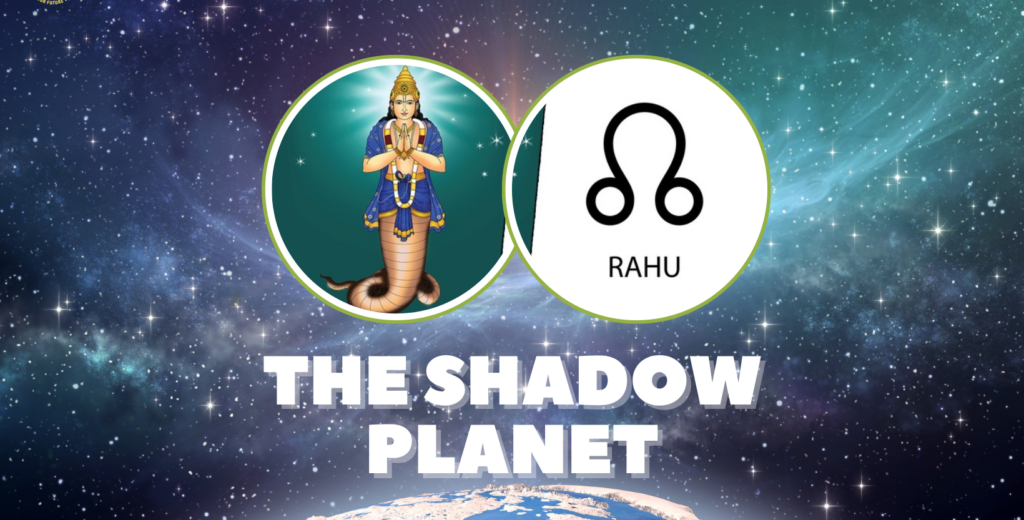
Unlike the visible planets in the solar system, Rahu is known as a shadow planet. It does not have a physical body but represents a mathematical point in the sky where the path of the Moon intersects the path of the Sun. Despite not being a physical planet, Rahu holds tremendous symbolic importance in Vedic astrology because it reflects the psychological and karmic forces that shape human life.
When Rahu is strongly activated in a person’s chart through its placement in a house, its influence on other planets, or during Rahu Mahadasha, people often experience periods of transformation. These phases may involve rapid changes, new opportunities, or intense lessons that encourage personal evolution.
Rather than being purely negative, Rahu acts as a catalyst for growth. It draws attention toward areas of life where the soul seeks experience, learning, and expansion. Understanding Rahu’s true nature helps us see that its influence is not meant to create fear, but to encourage deeper awareness and transformation.
The Mythological Origin of Rahu in Vedic Astrology
The story of Rahu comes from one of the most famous myths in Hindu tradition, the Samudra Manthan, or the churning of the cosmic ocean.
According to this story, the gods (Devas) and demons (Asuras) joined forces to churn the cosmic ocean in search of Amrita, the nectar of immortality. Many divine treasures emerged from the ocean during this process, but the most valuable was the nectar that could grant eternal life.
When the nectar finally appeared, Lord Vishnu took the form of Mohini, a beautiful divine being, and began distributing the nectar only to the gods so that balance in the universe could be maintained.
However, one clever Asura disguised himself as a god and secretly sat among the Devas to receive the nectar. Just as he drank the nectar, the Sun and the Moon recognized the deception and informed Lord Vishnu. Immediately, Vishnu used his Sudarshana Chakra to cut off the demon’s head.
Because the demon had already tasted the nectar of immortality, he did not die. Instead, his head became Rahu, and his body became Ketu.
This myth carries deep symbolic meaning. Rahu represents the head without a body, a force driven by endless desire, curiosity, and hunger for experience. Without a body to feel satisfaction, Rahu’s appetite can never be fully fulfilled. This is why Rahu in astrology often represents powerful cravings, ambitions, and the urge to explore life’s unknown territories.
At the same time, Rahu’s myth also reminds us that desire and ambition are part of the cosmic order. When guided with awareness, these forces can become powerful engines for transformation and evolution.
Rahu as the Planet of Desire and Ambition
In Vedic astrology, Rahu symbolizes the part of the human psyche that constantly seeks new experiences. It represents curiosity about the unknown and the desire to move beyond familiar patterns of life.
Wherever Rahu is placed in the birth D1 chart and D9 chart, it creates a strong pull toward that area of life. A person may feel fascinated, ambitious, or even obsessed with achieving success or understanding within that domain. Rahu pushes individuals to explore areas where they may feel both excitement and uncertainty.
This influence often makes Rahu associated with ambition, innovation, and unconventional thinking. Rahu is known for breaking traditional boundaries and encouraging people to pursue paths that are different from societal expectations. Many individuals who work in emerging technologies, international environments, research, or unconventional careers often have a strong Rahu influence in their charts.
Rahu also represents attraction toward foreign cultures, distant places, and experiences outside one’s comfort zone. It encourages people to expand their perspective and interact with the wider world.
However, Rahu’s energy can sometimes create confusion because it magnifies desires. When desires become too intense, they can lead to restlessness or dissatisfaction. This is why Rahu is often linked with illusion and temporary fascination. The lesson Rahu teaches is to experience the world while gradually developing awareness and balance.
Over time, Rahu’s influence helps individuals understand the difference between temporary desires and deeper fulfillment. Through this process, the soul gains wisdom and maturity.
In this way, Rahu in Vedic Astrology acts as a powerful teacher. It pushes the individual toward experiences that may initially feel intense or unfamiliar, but ultimately contribute to personal growth and the evolution of consciousness.
Rahu and Karma – The Direction of the Soul’s Growth
In Vedic astrology, Rahu is closely connected with the concept of karma and the evolution of the soul. While many planets in the birth chart represent personality traits, abilities, or circumstances, Rahu reveals something deeper, the direction in which the soul seeks growth in this lifetime.
Every birth chart contains two important points known as the lunar nodes, Rahu and Ketu. These two points form a karmic axis that reflects the journey of the soul across time. Rahu represents the area of life where the soul feels a strong urge to explore, learn, and experience something new.
Unlike the comfort zones shown by other planetary influences, Rahu often pushes individuals toward unfamiliar situations. These experiences may feel challenging or confusing at first, but they usually contain important lessons for personal development.
For example, the house where Rahu is placed in a birth chart indicates a domain of life that naturally attracts the person’s attention. There may be a sense of fascination or ambition related to that area. The individual may feel compelled to pursue experiences connected with that house, even if those experiences involve uncertainty or change.
This attraction happens because Rahu symbolizes unfulfilled curiosity from past karmic journeys. The soul enters this life carrying certain impressions and desires that seek completion. Rahu shows where those unfinished experiences may unfold.
However, Rahu’s path is rarely straightforward. The lessons connected with Rahu often involve trial, error, experimentation, and gradual understanding. Through these experiences, individuals develop wisdom and maturity.
Over time, Rahu encourages a person to move beyond fear and step into areas of life that expand awareness. In this sense, Rahu does not simply represent desire, it represents the soul’s urge to evolve through experience.
Rahu vs Ketu – The Karmic Axis
To understand Rahu fully, it is essential to also understand its counterpart, Ketu. Rahu and Ketu always appear opposite each other in the birth chart, forming a karmic axis that represents the balance between past experiences and future growth.
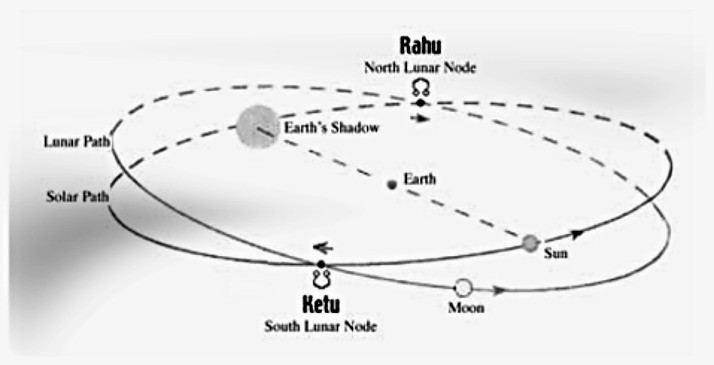
Ketu symbolizes the part of life that feels familiar or instinctive. It reflects knowledge and tendencies carried forward from previous karmic patterns. Because of this, the house where Ketu is placed often represents areas where a person may feel naturally comfortable or detached.
Rahu, on the other hand, represents the opposite direction. It points toward experiences that are unfamiliar but important for growth. While Ketu reflects the past, Rahu indicates the future path of learning and exploration.
The relationship between Rahu and Ketu can be understood as a journey from past mastery toward new understanding. The soul begins life with the habits and experiences represented by Ketu, but gradually moves toward the lessons represented by Rahu.
For example, if Ketu represents a past comfort zone, Rahu represents the frontier that invites growth. The process of balancing these two forces often shapes the major themes of a person’s life.
In many ways, the Rahu–Ketu axis symbolizes the ongoing movement of the soul between experience and awareness. Ketu provides wisdom gained from past journeys, while Rahu encourages new exploration and expansion.
When individuals learn to balance these energies using the wisdom of Ketu while moving courageously toward Rahu’s direction, they begin to align with the deeper purpose of their karmic journey.
Why Rahu Creates Sudden Changes in Life
One of the most fascinating aspects of Rahu in astrology is its ability to bring sudden shifts and unexpected developments in life. People often notice that when Rahu becomes active in their chart, especially during Rahu Mahadasha or important transits, life may take surprising turns.
These changes occur because Rahu represents the energy of Maya, or illusion. Rahu magnifies desires, ambitions, and attractions, drawing individuals toward experiences that appear exciting or compelling.
This magnifying effect can sometimes create confusion, especially when expectations do not match reality. Rahu may initially lead people toward situations that seem promising but later reveal deeper lessons. Through this process, individuals learn to distinguish between temporary fascination and genuine fulfillment.
At the same time, Rahu’s influence can also open doors to remarkable opportunities. Because Rahu breaks traditional boundaries, it often encourages people to explore unconventional paths. Many individuals who achieve success in emerging fields, technology, research, or global environments have strong Rahu influences in their charts.
Rahu is also closely associated with foreign connections and unfamiliar environments. Its influence may lead people to travel, interact with different cultures, or engage with ideas that challenge their existing worldview.
Although Rahu’s changes may initially feel unsettling, they often play a crucial role in personal transformation. By pushing individuals beyond their comfort zones, Rahu encourages them to grow, adapt, and discover new dimensions of their potential.
In this way, Rahu acts not only as a force of disruption but also as a catalyst for awakening and expansion.
When Rahu Becomes a Powerful Positive Force
Although Rahu in Vedic astrology is often associated with confusion or illusion, it can also become one of the most powerful forces for success and transformation when its energy is understood and directed wisely.
Rahu represents the courage to move beyond traditional boundaries. It encourages individuals to explore new ideas, challenge existing systems, and step into unfamiliar territories. Because of this quality, Rahu is often connected with innovation, discovery, and progress.
In modern times, Rahu is frequently associated with fields that involve cutting-edge thinking and global influence. Technology, artificial intelligence, digital communication, international business, aviation, research, and unconventional career paths often carry a strong Rahu influence.
When Rahu is well placed in the birth chart or supported by other planets, it can provide extraordinary drive and ambition. Individuals with a strong Rahu influence may develop the ability to see possibilities where others see limitations. They may be willing to take risks, experiment with new approaches, and pursue goals that require bold thinking.
Rahu can also create opportunities for global exposure. It often brings connections with foreign lands, diverse cultures, and environments that expand a person’s worldview. Through these experiences, individuals may gain insights that help them grow both materially and intellectually.
However, the key to Rahu’s positive expression lies in awareness. When ambition is guided by wisdom and balance, Rahu becomes a force that pushes individuals toward meaningful achievements and transformative breakthroughs.
Life Lessons of Rahu in Vedic Astrology
Every planet in astrology carries certain lessons for the soul, and Rahu’s lessons are often among the most intense and transformative.
One of Rahu’s primary teachings is the ability to distinguish between illusion and reality. Because Rahu magnifies desires and attractions, it often leads individuals toward experiences that initially appear extremely appealing. Over time, these experiences reveal deeper truths about what truly brings fulfillment.
Through this process, Rahu encourages individuals to develop awareness and maturity. It teaches that ambition and desire are natural parts of human life, but they must eventually be balanced with understanding and wisdom.
Another important lesson Rahu brings is adaptability. Rahu often places individuals in unfamiliar situations where they must learn quickly, think creatively, and adapt to changing circumstances. These experiences strengthen resilience and expand personal capabilities.
Rahu also encourages individuals to break limitations. It pushes people to question societal expectations, explore unconventional ideas, and discover their unique identity. In this way, Rahu plays a role in helping individuals express their individuality and creative potential.
Ultimately, Rahu’s deeper purpose is not simply to create desire, but to guide the soul toward greater awareness. By experiencing both fascination and disillusionment, individuals gradually develop clarity about what truly matters in life.
Exploring Rahu in Your Birth Chart
Understanding Rahu’s influence in Vedic astrology becomes even more meaningful when we examine its placement within an individual birth chart. The house where Rahu is positioned indicates the area of life where strong desires, ambitions, and karmic lessons may unfold.
For example, Rahu placed in different houses can influence themes such as career ambitions, relationships, personal identity, or spiritual exploration. Each placement carries unique opportunities for growth and transformation.
To explore Rahu’s influence in more detail, you may find these guides helpful:
- Rahu Mahadasha Effects – Understanding how Rahu’s major planetary period influences life events and personal transformation.
- Rahu in the 12 Houses – A detailed explanation of how Rahu behaves in each house of the birth chart.
- Rahu Mantra – A traditional Vedic mantra practice that helps balance Rahu’s energy and cultivate mental clarity.
These resources provide deeper insights into how Rahu operates in specific situations and how its powerful energy can be guided in a constructive direction.
While general articles can help us understand Rahu’s symbolic meaning, the true influence of Rahu becomes clearer when we examine its placement within an individual birth chart. Each person’s Rahu placement interacts with other planets, houses, and karmic patterns in unique ways.
If you would like to understand how Rahu influences your personal birth chart, life lessons, and karmic path, you may consider a personalized Vedic astrology reading.
Frequently Asked Questions About Rahu in Vedic Astrology
- Introduction – Understanding Rahu Beyond Fear
- The Mythological Origin of Rahu in Vedic Astrology
- Rahu as the Planet of Desire and Ambition
- Rahu and Karma – The Direction of the Soul’s Growth
- Rahu vs Ketu – The Karmic Axis
- Why Rahu Creates Sudden Changes in Life
- When Rahu Becomes a Powerful Positive Force
- Life Lessons of Rahu in Vedic Astrology
- Exploring Rahu in Your Birth Chart
- Frequently Asked Questions About Rahu in Vedic Astrology
- Conclusion – Rahu as a Catalyst for Growth
What does Rahu represent in Vedic astrology?
Rahu in Vedic astrology represents powerful desires, ambitions, and the urge to explore new experiences. It symbolizes the part of the human mind that seeks growth through curiosity and experimentation. Rahu often pushes individuals toward unfamiliar situations so that they can learn important life lessons and expand their awareness.
Is Rahu considered a negative planet in astrology?
Rahu is not purely negative. Although Rahu can create confusion, sudden changes, or intense desires, it also plays an important role in personal growth. Rahu encourages individuals to explore new paths, challenge limitations, and gain experience in areas that promote evolution and learning.
What happens during Rahu Mahadasha?
Rahu Mahadasha is a major planetary period in Vedic astrology that lasts 18 years. During this time, Rahu’s influence becomes very strong and can bring significant changes in life. People may experience new opportunities, unexpected events, foreign connections, or rapid transformation in career and personal life.
What is the difference between Rahu and Ketu?
Rahu and Ketu are known as the lunar nodes and always appear opposite each other in the birth chart. Rahu represents future desires and the direction of growth in life, while Ketu represents past experiences and areas where the soul already has familiarity or detachment.
How can Rahu’s energy be balanced?
Rahu’s energy can be balanced through awareness, discipline, and spiritual practices. Meditation, mantra chanting, and developing clarity in one’s goals can help manage Rahu’s intense influence. Traditional Vedic practices such as chanting Rahu mantras are also believed to help harmonize its energy.
Conclusion – Rahu as a Catalyst for Growth
Rahu is one of the most intriguing forces in Vedic astrology because it represents the human desire to explore the unknown. While its influence can sometimes bring confusion or unexpected change, it also opens doors to growth, discovery, and transformation.
Through Rahu’s energy, individuals are encouraged to move beyond familiar patterns and experience life more fully. The challenges Rahu brings are often opportunities for deeper understanding and personal evolution.
When Rahu’s lessons are approached with awareness and balance, its influence becomes a powerful catalyst for progress. It encourages individuals to expand their perspective, pursue meaningful ambitions, and develop wisdom through real-life experiences.
Rather than fearing Rahu, understanding its purpose allows us to see it as a guide that leads the soul toward growth, awareness, and transformation.
In this way, Rahu becomes not just a symbol of desire, but a reminder that life itself is a journey of exploration and awakening.

Explore Astrology Readings with Tejashree
Personal Vedic astrology consultations are available for those seeking deeper insight into their life path.
https://www.fiverr.com/s/xX3gyKX
- Rahu in Vedic Astrology: Meaning, Karma and Life Lessons - March 12, 2026
- Navamsa Chart (D9) in Vedic Astrology: Meaning and Importance - March 10, 2026
- Does Astrology Control Destiny? Karma, Free Will & Vedanta - March 7, 2026
0 Comments